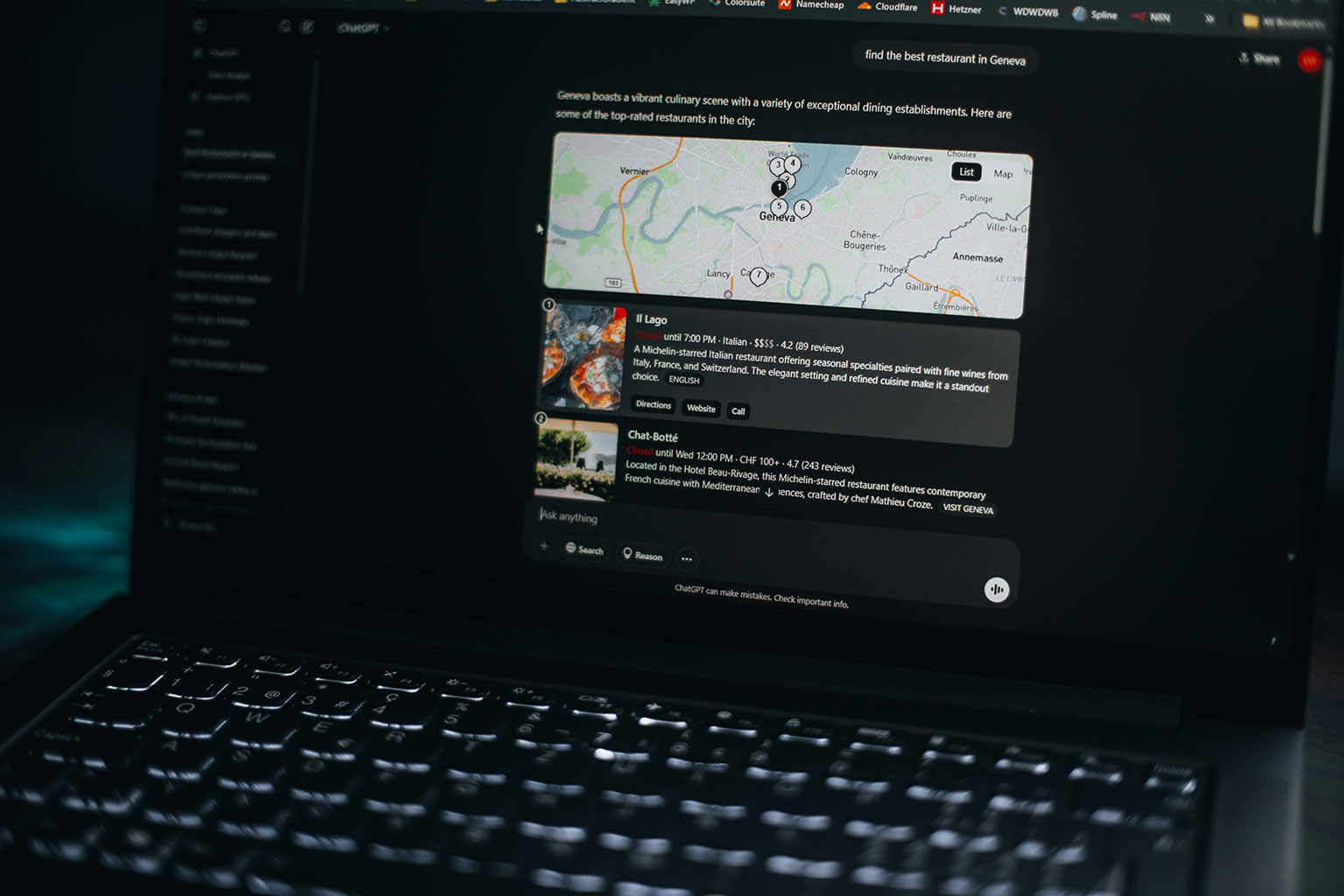
A homeowner’s water heater fails on a Sunday morning. Two years ago she would have typed “water heater repair near me” into Google and called one of the first three map results. Today there is a good chance she opens ChatGPT or Google’s AI Mode and asks, “Who is the most reliable plumber near me for an emergency water heater repair, and roughly what should it cost?”
The assistant does not hand her ten links. It gives her two or three names, a short reason for each, and a ballpark price. She calls one of them.
If your plumbing company is not in that shortlist, you did not lose a ranking. You lost the customer before she ever saw a list. This is the new visibility problem for home services businesses, and it is quietly reshaping where emergency and high value jobs go.
Why home services businesses get skipped by AI
AI assistants do not pick contractors the way Google Maps ranks them. They assemble an answer from what they can find and trust about a business across the web. Home services companies tend to lose here for a few specific reasons.
Most local contractor sites are thin. They have a homepage, a services page, and a contact form. There is very little text an AI system can read to understand what the company does, where it works, and why it is trustworthy. AI systems favor sources that state things clearly, and a five page brochure site says almost nothing.
Reviews and reputation live off site, and they are inconsistent. An assistant weighing “reliable” and “best” leans on signals like review volume, recency, and sentiment across Google, industry directories, and mentions elsewhere. A business with forty reviews from three years ago looks weaker than a competitor with three hundred recent ones.
Service areas and specifics are vague. “We serve the greater metro area” tells an AI nothing it can match to “near me.” Assistants reward businesses that name their cities, neighborhoods, and specialties in plain language.
And almost no contractor site is structured for machines. No schema markup, no clear FAQ blocks, no consistent business information. The site may look fine to a human and be nearly unreadable to the systems now deciding who gets recommended.
Featured answer: How do home services businesses get found in AI search?
To get found in AI search, a home services business needs three things working together: a content rich website that clearly states its services, locations, and proof of quality; a strong and current reputation across Google Business Profile and review platforms; and technical structure such as schema markup and FAQ formatting so AI systems can read, trust, and quote the business in answers.
That is the short version. Here is how to actually build it.
The five moves that get you into the AI shortlist
1. Turn thin service pages into real answers. Every core service deserves its own page that answers what a homeowner actually asks: what the service includes, common problems and signs, rough cost ranges, how long it takes, and what makes your approach different. A page titled “Emergency AC Repair in [City]” that answers real questions gives AI systems something concrete to pull from. Vague, keyword stuffed pages do not.
2. Get specific about where you work. Name your service cities and neighborhoods in normal sentences, not just a list in the footer. Create location relevant content where volume justifies it. When someone asks an assistant for a roofer in a specific suburb, you want your business clearly associated with that place.
3. Make your reputation loud and current. Reviews are one of the strongest trust signals AI systems use for local recommendations. Build a simple, consistent process to earn recent reviews on Google and relevant platforms, and respond to them. Volume and recency both matter. This is not vanity, it is the raw material AI uses to decide who is “reliable.”
4. Add structure AI can read. Local business schema, service schema, and FAQ markup tell search and AI systems exactly what your business is, where it operates, and what it offers. FAQ sections written around the real questions homeowners ask do double duty: they help human visitors and they feed the direct answer formats AI systems prefer. This is where most competitors are doing nothing, which makes it the easiest edge to grab.
5. Keep your business facts identical everywhere. Your name, address, phone number, hours, and service areas should match across your website, Google Business Profile, and every directory. Inconsistency makes AI systems less confident about recommending you, and confidence is what earns the mention.
What this looks like when it works
Picture two roofing companies in the same city. One has a five page site, forty old reviews, and a vague service area. The other has detailed pages for each roof type and repair, dozens of recent reviews, named neighborhoods, and clean schema.
When a homeowner asks an AI assistant for a trustworthy roofer for storm damage, the second company is easy to understand, easy to trust, and easy to quote. It gets named. The first company does not, and its owner never knows the conversation happened. Multiply that across a year of emergency and replacement jobs and the gap is not small.
The good news for home services businesses is that the bar is still low. Most of your local competitors have done none of this. The window to become the obvious AI recommendation in your area is open right now, and it will not stay open once everyone catches on.
If you want to be the name AI assistants give when a homeowner in your area is ready to hire, WebBirds builds this from the ground up. Our SEO and local AEO work turns thin contractor sites into the kind of clear, trusted, structured source that AI systems recommend, and it pairs with web design built to convert the calls once they come in.
Frequently Asked Questions
How do I know if my home services business shows up in AI search?
Ask the assistants directly. Open ChatGPT, Gemini, and Google AI Mode and ask for the best plumber, roofer, or HVAC company in your city, then ask emergency and specialty versions of the question. If you are not named, or your competitors are, you have your answer.
Is AI search really replacing Google Maps for finding contractors?
Not replacing it yet, but adding a new layer on top. Many homeowners still use Maps and reviews, and many now also ask AI assistants for a shortlist. The businesses that win show up in both, because the two reinforce each other.
What is the single most important factor for AI recommendations?
There is no one factor, but trust signals do the heaviest lifting: a strong, recent review profile combined with a website that clearly explains your services and service areas. AI systems recommend businesses they can understand and trust.
Do I need schema markup for a small contractor site?
Yes, and it is one of the highest leverage moves you can make. Local business, service, and FAQ schema help AI and search systems read exactly what you do and where, and most of your competitors have not added it.
How long does it take to show up in AI answers?
It varies. Reputation and content improvements compound over weeks and months, and AI systems update their view of your business as new signals accumulate. It is closer to ongoing SEO than a one time switch, so the earlier you start the better.
Can I do this myself or do I need help?
The moves are understandable, but doing them well across content, reviews, technical structure, and consistency takes time and expertise. Many home services owners start the basics themselves and bring in a team to build the content depth and technical structure that actually earns AI recommendations.